Why Doesn't Congo Make Headlines?
May 14, 2026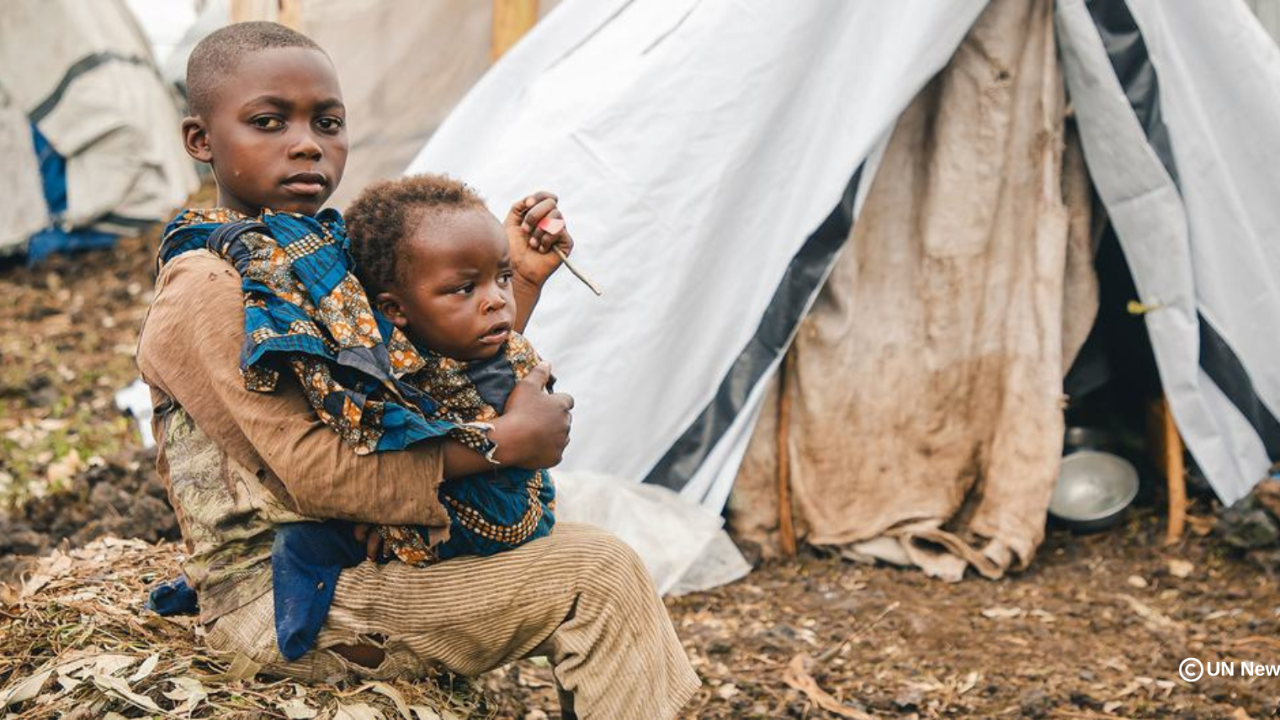
The Untold Story of 30 Years of Genocide, Backed by Western Powers
Introduction
For decades, millions of people in Eastern Congo have lived through violence, displacement, and loss. Yet much of the world barely talks about it. When people hear about Congo, they often hear about minerals, conflict, war, and instability. But rarely about families, children, communities, and human lives.
This silence is not accidental. It is deliberate. And understanding why Congo doesn't make headlines requires confronting an uncomfortable truth: Eastern Congo has endured one of the deadliest genocides since World War II, orchestrated by the Rwandan regime and backed by Western powers. More than 15 million people have been killed. Yet the world calls it a "regional conflict."
This article explores the genocide that the world refuses to see, and why keeping Congo visible is an act of justice.
How Western Governments Enabled the Killing
The role of Western nations in enabling Congo's genocide cannot be overstated. While Rwandan forces committed the atrocities, they did so with the knowledge, support, and sometimes direct military and financial aid of Western governments.
The United States maintained diplomatic and financial relationships with Rwanda despite documented evidence of genocide in the DRC. The US provided military aid and training to Rwanda. American military advisors worked with Rwandan forces. When the International Criminal Court attempted to investigate Rwandan crimes in the DRC, the US worked to undermine these investigations.
Belgium, Congo's former colonizer, maintained economic interests in the region and turned a blind eye to atrocities. British companies continued to extract minerals from conflict zones. Various European governments maintained trade relationships with Rwanda despite knowing about the genocide.
But the complicity goes deeper than military and financial support. Western governments and corporations have a vested interest in Congo's instability. Congo's mineral wealth is worth 24 trillions of dollars. Cobalt, coltan, gold, diamonds, copper, uranium, lithium... These minerals power the global economy. They go into smartphones, laptops, electric vehicles, weapons systems, and renewable energy technologies.
A stable, unified Congo with a strong government would demand fair prices for its minerals and enforce environmental and labor standards. An unstable Congo, fractured by conflict and controlled by militias, allows Western corporations and Chinese interests to extract minerals at minimal cost, without oversight, and without sharing profits with local communities or paying taxes to the state.
The genocide in Congo is not incidental to Western interests. It is convenient. It keeps Congo weak, divided, and unable to demand justice or fair compensation for its resources.
Why Is Congo Invisible? The Politics of Forgetting
Several factors contribute to Congo's invisibility in global consciousness, but they are not natural or inevitable. They are engineered.
Some critics believe global economic interests benefit from Congo remaining invisible. Others question whether media systems connected to powerful corporate and financial interests are truly incentivized to sustain attention on the crisis. The answer to both questions is yes.
Major Western media outlets are owned by large corporations and wealthy individuals with economic interests in global mineral markets. These same individuals and corporations benefit from cheap minerals extracted from Congo without oversight or environmental accountability. Reporting extensively on genocide in Congo would require asking uncomfortable questions about who profits from instability. It would require naming Western governments and corporations as complicit in genocide. Most mainstream media outlets are not willing to do this.
Geographic distance is another factor. Eastern Congo is remote, difficult to access, and physically far from major media hubs. International journalists face significant logistical and safety challenges in reporting from the region. But this alone does not explain the silence. Other remote conflicts receive international coverage. Congo's silence is a choice.
The conflict in Eastern Congo involves multiple armed groups, overlapping geopolitical interests, and intricate historical grievances. The issue is not that Congo is too complex. The issue is that telling the truth about Congo implicates Western governments and corporations.
But perhaps the most important factor is racialized narratives. Congo's suffering is often portrayed through a lens of helplessness and victimhood rather than resilience and agency. African suffering is presented as inevitable, as if it springs from African cultures or African failures rather than from external conquest, exploitation, and genocide. This narrative shapes how the crisis is covered and how audiences engage with it.
Many also point to another uncomfortable reality: African suffering, especially Black suffering, often receives less visibility, less urgency, and less empathy worldwide. Some lives are seen immediately. Others struggle to be seen at all. When Western countries experience tragedy, it dominates global news for weeks. When African countries experience genocide, it is relegated to brief mentions or ignored entirely.
The deeper truth is this: Congo is invisible because making Congo visible would require confronting Western complicity in genocide. It would require acknowledging that Rwanda's invasion and occupation of the DRC, supported by Western powers, has resulted in mass killing on a scale comparable to World War II. It would require questioning the Western governments and corporations that have profited from Congo's destabilization.
Silence about Congo is not a neutral position. It is a political choice. It is complicity.
Beyond Suffering: The Resilience and Strength of Congolese Communities
But here's what often gets lost in the focus on crisis: Congo is not only suffering. Eastern Congo and the DRC more broadly are places of extraordinary resilience, courage, and strength.
Despite facing genocide, armed violence, displacement, insecurity, and humanitarian crises, communities continue to raise families. Parents protect their children despite the dangers. They find ways to feed their families, to keep them safe, to give them hope for a better future.
Communities educate their children. Families prioritize education as a path forward, often sacrificing greatly to keep children in school even when schools are unsafe or occupied by armed groups. Teachers continue to teach despite receiving no salary. Students continue to study despite having no textbooks.
People build businesses. Even in contexts of extreme insecurity, Congolese people create small enterprises and economic opportunities. They farm. They trade. They create value. They demonstrate entrepreneurship and initiative despite overwhelming obstacles.
Communities support one another. In the absence of a functioning state, communities create their own systems of care and survival. Neighbors help neighbors rebuild after displacement and violence. Mutual aid networks sustain people through crisis.
Artists, musicians, and cultural workers keep Congolese culture alive and vibrant. Despite everything, Congolese music, art, and culture continue to flourish and inspire the world. Congolese artists have won international acclaim. Congolese musicians have shaped global popular culture.
Children dream of futures beyond conflict. Parents dream of peace and stability for their families. Young people envision a different Congo, one built on justice, peace, and shared prosperity.
Every day, millions of Congolese people survive with dignity, agency, and hope. Communities should not have to become "viral" for their humanity to matter. Awareness should not depend on algorithms. The people of Congo are not statistics. They are mothers, fathers, students, entrepreneurs, children, and entire communities trying to survive and rebuild.
The Cost of Invisibility
Silence has consequences. When communities are invisible, they are forgotten in policy decisions that affect their lives and futures. Resources flow toward crises that receive media attention, leaving Congo chronically underfunded. Communities are disempowered in their own narratives, with external actors defining their stories and struggles. They are marginalized in global conversations about peace, development, and human rights.
More than this, invisibility enables the perpetuation of genocide. As long as the world does not know what is happening in Congo, as long as the role of Rwanda and Western powers remains hidden, the killing can continue. Perpetrators face no consequences. Complicit governments face no pressure. The machinery of death operates without opposition.
Keeping Congo visible is not a humanitarian act. It is a justice act. It is a precondition for ending genocide.
What Awareness Actually Means
Raising awareness about Congo's crisis is not about pity or charity. It is about truth. It is about understanding what is actually happening, beyond simplified narratives and stereotypes. It is about recognizing that Congo's suffering is not inevitable or natural. It results from decisions made by identifiable actors: Rwanda's government, Western governments, international corporations, and armed groups.
Awareness is about accountability. It is about holding international actors, governments, corporations, and armed groups responsible for their roles in perpetuating conflict and genocide. It is about demanding that Rwanda withdraw from DRC territory. It is about demanding that Western governments end their support for destabilizing forces. It is about demanding that international corporations divest from conflict minerals.
Awareness is about agency. It is about recognizing and supporting the solutions, leadership, and visions that Congolese communities themselves are developing. Congolese civil society organizations are documenting atrocities. Congolese women are organizing for peace. Congolese youth are demanding accountability. These voices must be heard and supported.
Awareness is about justice. It is about addressing the root causes of conflict, including resource extraction, arms flows, and geopolitical competition that fuel genocide. It is about demanding reparations for victims. It is about demanding trials for perpetrators.
Awareness is about solidarity. It is about standing with communities in their struggles and supporting their own efforts toward peace, justice, and development.
Awareness is the first step. But it must lead to action.
How You Can Help: From Awareness to Action
If you have read this far, you are already taking the first step: becoming aware. Here is what comes next.
Learn. Educate yourself and others about what is actually happening in Congo. Read news from Congolese journalists and media outlets. Follow organizations led by Congolese people. Look beyond mainstream narratives. Seek out Congolese voices. Listen to survivors. Understand the history. Learn the names of perpetrators and complicit governments.
Speak up. Use your voice to challenge narratives that reduce Congo to stereotypes or that frame Congolese suffering as inevitable or natural. Make it clear that Congo's tragedy is the result of specific decisions by identifiable actors: Rwanda's government, Western governments, and international corporations.
Share responsibly. Use your platforms to keep Congo visible. Share stories, articles, and perspectives from the region. Share survivor testimonies. Share investigations by human rights organizations. Share the voices of Congolese activists and change-makers. Do not sensationalize suffering. Do not perpetuate stereotypes. Share with respect for Congolese dignity and agency.
Support communities. Donate to or volunteer with organizations working on the ground in Congo. Choose organizations led by and accountable to Congolese communities. Organizations like Congolese civil society networks, women's movements, and youth organizations are leading the fight for peace and justice.
Demand accountability. Call on your elected representatives to support policies that promote peace, accountability, and development in the DRC. Demand that your government withdraw support from Rwanda if it continues to occupy DRC territory. Demand that international corporations divest from conflict minerals. Demand that those responsible for genocide face justice.
Refuse indifference. No community should suffer in silence. Indifference is not neutrality. Indifference is complicity. Refuse to be indifferent. Refuse to accept that this is simply how things are. Refuse to allow Congo to remain invisible.
Conclusion: Visibility as an Act of Justice
No community should suffer in silence. The people of Eastern Congo deserve the same global attention, resources, and solidarity that other humanitarian crises receive. They deserve recognition for 30 years of enduring genocide. They deserve accountability for those responsible. They deserve support in their own efforts toward peace and justice.
Keeping Congo visible is not charity. It is justice. It is recognition that the lives, dignity, and futures of Congolese people matter. It is commitment to a world where suffering is not determined by geography or media cycles. It is acknowledgment that Western governments and corporations have a responsibility to answer for their role in Congo's tragedy.
The question is not whether Congo's genocide is real. It is. The question is: will you help keep it visible? Will you demand accountability? Will you stand in solidarity with Congolese communities fighting for their futures?
Congo's story is not one of helplessness. It is a story of resistance, resilience, and the struggle for justice. That is the story the world needs to hear. That is the story you can help tell.
------------------
Team Congo is an NGO supporting communities in Congo through education, support for survivors of sexual violence, and social and economic development projects. If this resonates with you, and if your means allow it, please consider joining our Congo Supporters’ Circle. Thank you.
Main Sources:
HUMAN RIGHTS WATCH The Democratic Republic of the Congo: Crisis Without End https://www.hrw.org/world-report/2024/country-chapters/democratic-republic-congo
INTERNATIONAL CRISIS GROUP Congo: The Challenge of Preventing a Wider War in the East https://www.crisisgroup.org/africa/central-africa/democratic-republic-congo
AMNESTY INTERNATIONAL Democratic Republic of the Congo: Civilians Under Siege https://www.amnesty.org/en/latest/news/2023/09/democratic-republic-of-the-congo-civilians-under-siege/
UNITED NATIONS OFFICE FOR THE COORDINATION OF HUMANITARIAN AFFAIRS (OCHA) DRC Humanitarian Response Plan https://www.unocha.org/drc
MÉDECINS SANS FRONTIÈRES (MSF) The Humanitarian Crisis in Eastern DRC https://www.doctorswithoutborders.org/what-we-do/news-stories/special-reports/eastern-drc
INTERNAL DISPLACEMENT MONITORING CENTRE (IDMC) Democratic Republic of the Congo: IDP Figures and Trends https://www.internal-displacement.org/countries/democratic-republic-of-the-congo
CONGO RESEARCH GROUP (NEW YORK UNIVERSITY) Armed Groups in Eastern DRC: Mapping and Analysis https://congoresearchgroup.org/
WORLD BANK Democratic Republic of the Congo: Development Priorities https://www.worldbank.org/en/country/drc
AFRICAN UNION The African Union's Response to the DRC Crisis https://au.int/
CONGOLESE CIVIL SOCIETY ORGANIZATIONS Voices from Congo: Local Perspectives on Peace and Development https://www.congosiecp.org/