
The Colonial Genocide the World Forgot
Nov 05, 2025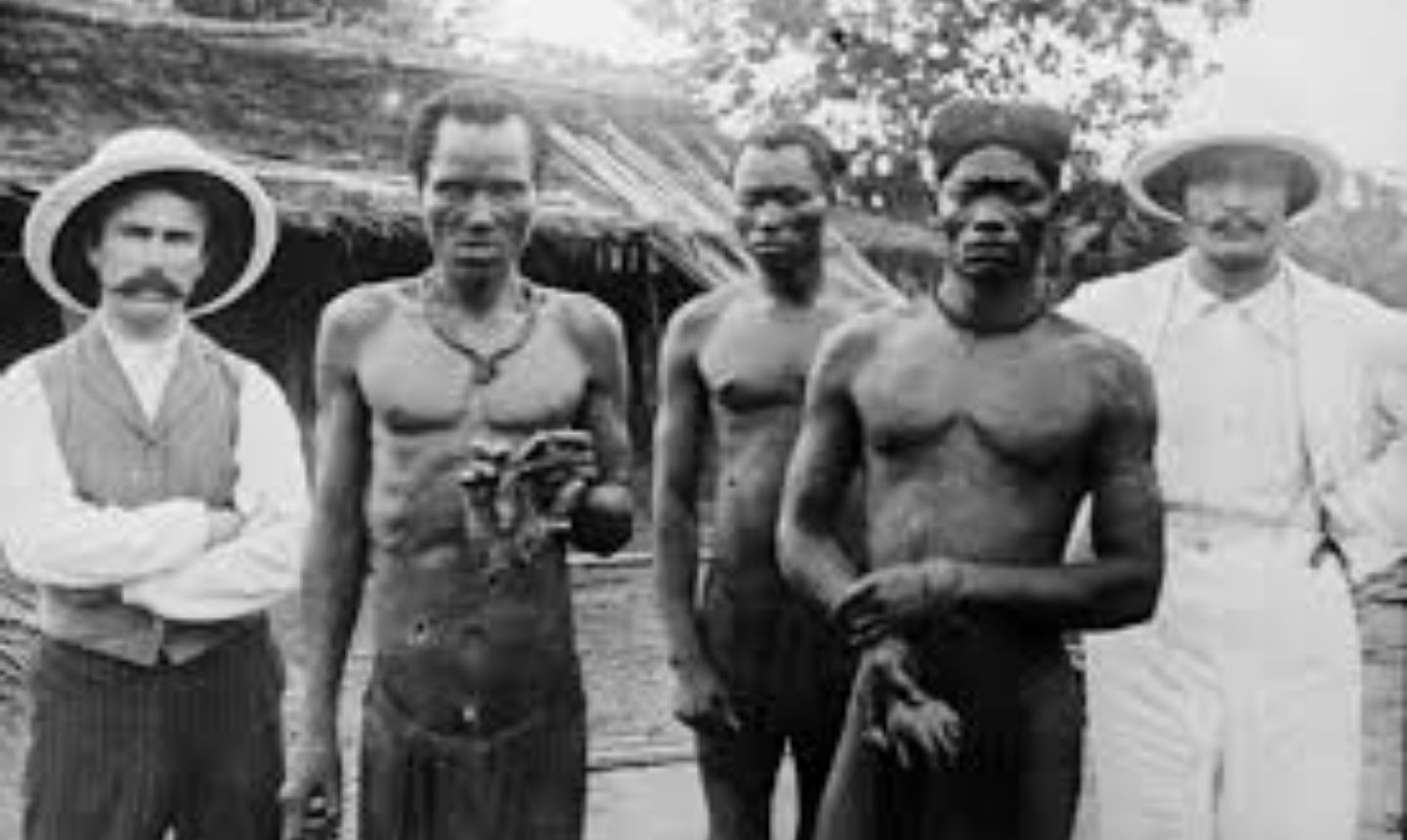
The Hidden History of a Forgotten Genocide
The history of Congo under Belgian colonial rule is one of the darkest and least acknowledged tragedies of modern times. Between 1885 and 1908, King Leopold II of Belgium turned Congo into his personal enterprise - a human and environmental catastrophe driven by greed, violence, and exploitation. Under his rule, an estimated 10 million Congolese men, women, and children were killed through forced labor, starvation, mutilation, and disease. This was not a byproduct of colonialism - it was a genocide built into its economic logic.
Leopold’s regime turned Congo into a private profit machine. Behind the rhetoric of “civilization” and “progress” lay one of the greatest crimes against humanity in history - a story systematically erased from Western memory.
A Land Claimed as Personal Property
In 1885, during the Berlin Conference, European powers divided Africa among themselves. King Leopold II managed to present himself as a humanitarian, claiming the Congo Basin in the name of philanthropy and free trade. In reality, he declared it his personal possession, calling it the Congo Free State - a bitter irony for a land subjected to absolute tyranny.
Congo’s vast territory - 2.3 million square kilometers - was governed not by a state, but by a king’s private companies. These companies extracted rubber, ivory, and minerals, demanding impossible quotas from local communities. Entire villages were forced to work without pay, punished brutally for the slightest resistance.
The Congolese people became enslaved on their own land.
A System of Terror and Control
The colonial system operated through calculated terror. Each village had to deliver a fixed monthly quota of rubber, or face violent reprisals. The Force Publique - a colonial army - enforced this regime through mutilation, hostage-taking, and executions. One of the most infamous practices was the severing of hands - a gruesome proof that bullets were “used efficiently.” Mothers saw their children held hostage to guarantee rubber deliveries. Villages that failed to meet quotas were burned to the ground.
These atrocities were not isolated acts of cruelty - they were part of a systematic, state-organized machinery of terror. Violence was the language of governance.
Demographic Collapse and Cultural Erasure
The consequences were catastrophic. Congo’s population, once estimated at 20 to 30 million, fell to fewer than 10 million within a single generation. This collapse was caused by forced labor, massacres, famine, and epidemic disease - all direct consequences of the colonial economy. Hundreds of ethnic groups, languages, and cultural traditions disappeared. Entire regions were depopulated. Oral histories, songs, and ancestral knowledge were lost forever.
The trauma is transgenerational - its echoes are still felt today in the social fractures, psychological wounds, and structural inequalities inherited from this genocide.
Congolese Resistance: The Unbroken Spirit
Despite unimaginable suffering, the Congolese never stopped resisting. From 1895 to 1908, revolts broke out across the territory - led by the Batetela, Bangala, Pende, and many other peoples who refused submission.
Armed only with courage, conviction, and unity, they rose against a brutal regime that sought to erase them. These uprisings were crushed, but they revealed something the colonizers could never destroy: the unbreakable spirit of resistance and dignity of the Congolese people.
That spirit still lives - in every act of remembrance, every demand for justice, and every voice that refuses silence.
A Call to Memory
To remember is not to dwell on the past - it is to confront the truth that shaped our present. Silence benefits the oppressor. Memory empowers the oppressed. Telling the story of the Congolese genocide is not about blame - it is about truth, accountability, and healing. Every story shared, every image recovered, every conversation opened is an act of resistance against erasure.
Honoring our ancestors means continuing their struggle:
for truth, dignity, and the liberation of memory.
--------------------------------------------------------------------------
References / Sources
-
Hochschild, Adam. King Leopold’s Ghost: A Story of Greed, Terror, and Heroism in Colonial Africa. Houghton Mifflin, 1998.
→ The foundational English-language account documenting atrocities and demographic collapse under Leopold II. -
Nzongola-Ntalaja, Georges. The Congo: From Leopold to Kabila – A People’s History. Zed Books, 2002.
→ A Congolese historian’s comprehensive overview of Congo’s political history and colonial trauma. -
Marchal, Jules. Le Congo Belge et la Formation de la Belgique Moderne (1880–1914). Éditions L’Harmattan, 1996.
→ A Belgian diplomat-turned-historian who exposed colonial crimes from inside the archives. -
Vangroenweghe, Daniel. Du sang sur les lianes: Léopold II et son Congo. Didier Hatier, 1985.
→ One of the first Belgian works to openly use the term génocide colonial in describing Leopold’s rule. -
Casement, Roger. The Congo Report (1904). British Parliamentary Papers, 1904.
→ Official British investigation documenting mutilations, forced labor, and massacres (primary source). -
Van Reybrouck, David. Congo: The Epic History of a People. HarperCollins, 2014.
→ A well-researched modern history blending oral testimonies, archives, and literary narrative. -
Ndaywel è Nziem, Isidore. Histoire générale du Congo: De l’héritage ancien à la République Démocratique du Congo. Duculot, 1998.
→ Essential for understanding the broader historical and cultural context from a Congolese perspective. -
Vellut, Jean-Luc (ed.). Le Congo Belge: Essais d’histoire politique et sociale. Académie Royale des Sciences d’Outre-Mer, 2005.
→ Academic collection analyzing the political structures and social consequences of Belgian colonialism. -
Coquery-Vidrovitch, Catherine. Africa and the Africans in the Nineteenth Century: A Turbulent History. M.E. Sharpe, 2009.
→ Provides a continental framework situating the Congo Free State within the wider context of colonial expansion. -
Todorov, Tzvetan. Mémoire du mal, tentation du bien: Enquête sur le siècle. Robert Laffont, 2000.
→ Philosophical reflection on memory, violence, and the ethics of remembrance — relevant to your “Call to Memory” section.