
Child Labour in Congo's Mines: A Persistent Tragedy
May 13, 2026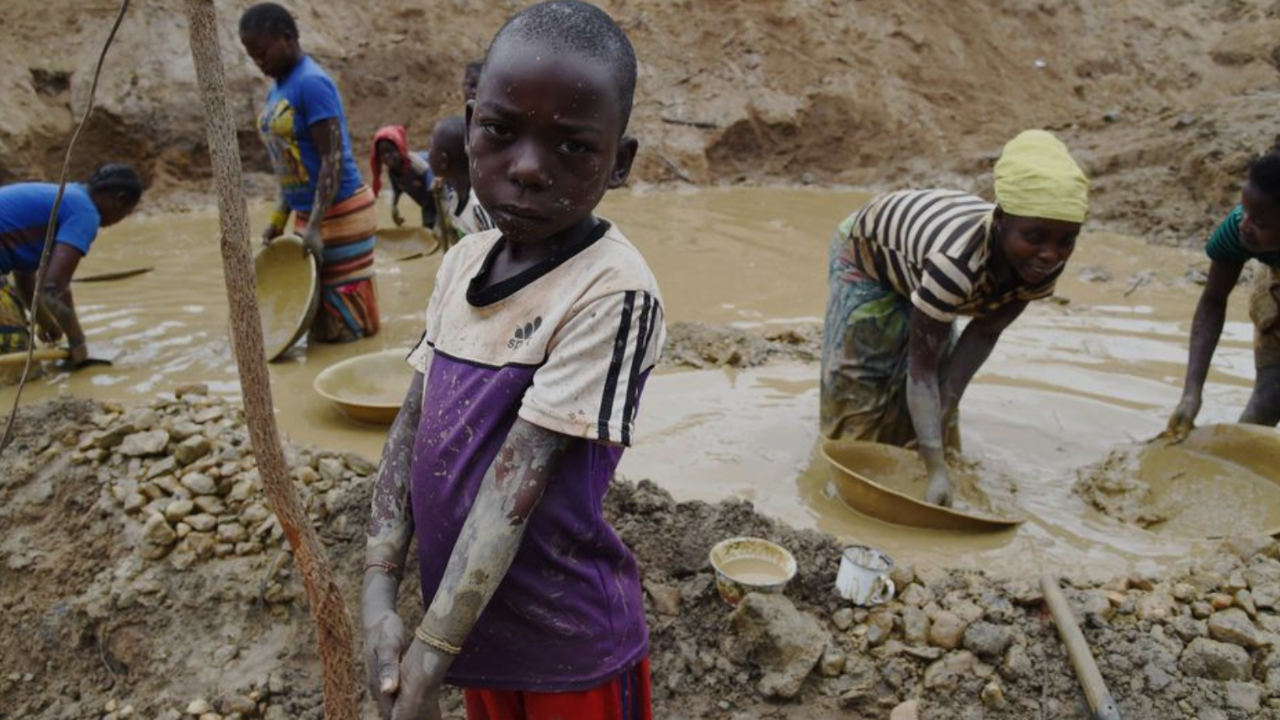
Introduction
The Democratic Republic of Congo (DRC) possesses immense mineral wealth, with over 1,100 precious minerals and metals. Paradoxically, it is in these mines that thousands of children sacrifice their childhood, their health, and their educational opportunities to extract resources that fuel the global economy. Child labour in DRC mines, particularly in cobalt extraction, represents one of the worst forms of child exploitation in the world.
The Scale of the Phenomenon
Exact figures remain difficult to establish, as a large portion of mining operations escapes any official oversight. According to UNICEF, in 2014, over 200,000 illegal miners worked in mines, of whom over 40,000 were children. More recent estimates remain alarming: in 2025, approximately 35,000 children were reported to work as washers, sorters, or diggers in artisanal mines out of a total of nearly 255,000 artisanal operators, according to the "Global Trace" report.
A 2006 study had identified approximately 43,880 children in mining zones in the south, distributed between Kasai Occidental (12,000), Kasai Oriental (11,880), and Katanga (20,000).
It is generally the regions of Eastern DRC, including North Kivu and Katanga, that record the highest numbers of working children in mining sites.
Cobalt & coltan: At the Heart of the Problem
The DRC is rich in multiple critical minerals that fuel the global tech and energy transition. The country produces approximately 74% of global cobalt supply and holds between 60-80% of the world's coltan reserves.
These minerals serve different purposes in our devices:
Cobalt is essential for manufacturing lithium-ion batteries used in mobile phones, laptops, and electric vehicles. Cobalt is found primarily in the south of the DRC in the copper belt region of Lualaba and Haut-Katanga provinces.
Coltan (short for columbite-tantalite) is a metallic ore from which tantalum is extracted. Tantalum is a key component in manufacturing integrated circuits crucial for the functionality of electronic gadgets, including smartphones. Coltan in the DRC is extracted mainly by artisanal and small-scale miners in the north-east regions.
However, approximately 80% of cobalt production comes from industrial mines and 20% from artisanal mines, which are generally less regulated and employ many children on a daily basis. In contrast, coltan in the DRC is extracted almost entirely by artisanal and small-scale miners, often under even more dangerous conditions.
Both extraction methods - whether cobalt or coltan - rely on child labour, unsafe working conditions, and exploitation. Every battery in your device and every circuit in your phone carries the human cost of this extraction.
Working Conditions: An Inhumane Reality
In these mining sites, children work relentlessly without any elementary safety or protection measures. Under unbearable heat, clouds of red dust, and poor lighting, these children up to 100 metres deep and are constantly exposed to the risk of asphyxiation, cave-in, or other fatal accidents.
More specifically, some children are brought to mining areas as young as 3 years old. When they reach 6 years old, they help carry mining sacks. Older children are sent to perform more dangerous work in tunnels, some of which reach depths of 100 metres or more.
Children lack air underground; they develop lung diseases, emphysema. These children work in very small galleries, and operators simply give them aspirin to keep them going. Some children subsequently become addicted to this medication or others.
Exposure to toxic substances affects not only the child's development but can also cause genetic mutations such as birth defects in future generations. Children are paid 1 to 2 dollars per day for extremely dangerous and exhausting work. This derisory compensation highlights the extreme exploitation to which these kids are subjected. The future of these children is compromised: many do not attend school. This deprivation of education creates a cycle of poverty that children will struggle to break as adults.
The Responsibility of Major Brands
Child cobalt and coltan miners contribute to supplying global technology giants. In April and May 2015, researchers from Amnesty International and Afrewatch interviewed 87 cobalt miners, including 17 children, working on five mining sites in southern DRC. They tracked vehicles carrying ore from mines to markets where major companies purchase it.
Major electronics brands, such as Apple, Samsung, and Sony, do not carry out elementary checks to verify that the manufacture of their products does not include cobalt or coltan extracted from mines by children, according to a report by Amnesty International and Afrewatch published in January 2016.
Structural Causes
Despite the DRC's immense mineral resources, the country faces endemic poverty. With populations living in very precarious conditions, children are forced to work in mines.
The socio-economic fabric is fragile in these very poor regions. Mining work for children is therefore taken for granted in many families and communities.
Efforts to Combat This Scourge?
Efforts have been undertaken to address this crisis. The International Labour Organization (ILO) launched the GALAB project, funded by the U.S. Department of Labor, designed to combat child labour in the artisanal cobalt mining sector in the Democratic Republic of Congo.
A monitoring and remediation system for child labour (SSRTE) recently identified over 6,200 children working in mines in Haut-Katanga and Lualaba provinces.
The GALAB project aims to establish referral and remediation services for identified children working in the cobalt sector. These actions are coordinated through a child labour monitoring and remediation system, and the project collaborates with partners such as UNICEF, IMPACT Transform, and the PABEA-Cobalt initiative to direct children towards appropriate services, which may include educational support, income-generating activities for families, and vocational training for older children.
Insufficient Legal Framework
Despite various regulations concerning mining operations issued by the Congolese government and the 2009 child protection law that prohibit the economic exploitation of children, concrete and effective measures are not being taken by the State to eradicate the problem.
Future Perspectives and Challenges
Progress is slow but real. However, the main challenges regarding sustainable development and human rights faced by artisanal cobalt extraction, notably child labour and the sexual exploitation of women, are generally found in tolerance zones and industrial mining residues.
To truly resolve this crisis, three approaches must be combined: strengthening the political will and capacity of the Congolese government, creating viable economic alternatives for mining populations, and demanding increased accountability from international companies that purchase cobalt.
Conclusion
Child labour in DRC mines is not an insurmountable problem, but a choice that governments and multinational companies continue to make. Every mobile phone, every electric vehicle contains an immense human cost, paid by children who did not choose their fate. As long as the structural causes of poverty are not addressed, and as long as major companies purchase strategic minerals without verifying its origins, these children will continue to dig in the darkness of mines for starvation wages.
The international community, African governments, and private sector actors share a common responsibility. Only through coordinated mobilization and concrete action will we one day be able to say that the DRC has finally begun to transform its mineral wealth into human wealth.
----------
Team Congo is an NGO supporting communities in Congo through education, support for survivors of sexual violence, and social and economic development projects. If this resonates with you, and if your means allow it, please consider joining our Congo Supporters’ Circle. Thank you.
Main Sources:
- Humanium - Child Labour in Mines in the DRC
- UNICEF France - In Diamond Mines
- UNICEF - Situation of Children in Artisanal Mining Zones
- Amnesty International - Child Labour Behind Smartphone and Electric Car Battery Production
- World Vision France - Child Labour in the DRC
- Mongabay - DRC: Children Still in Cobalt Mines
- International Labour Organization (ILO) - GALAB Project
- U.S. Department of Labor - Unite on the Worst Forms of Child Labor
- Anadolu Agency - Children as Slaves in DRC Cobalt Mines
- SWI swissinfo.ch - Child Labour in Cobalt Mines Embarrasses Swiss Operators